 KAYN
KAYNFor tennis athletes
Fitness training, adapted every day.
Strength, power and conditioning, planned around each athlete's court time, matches and tournaments.
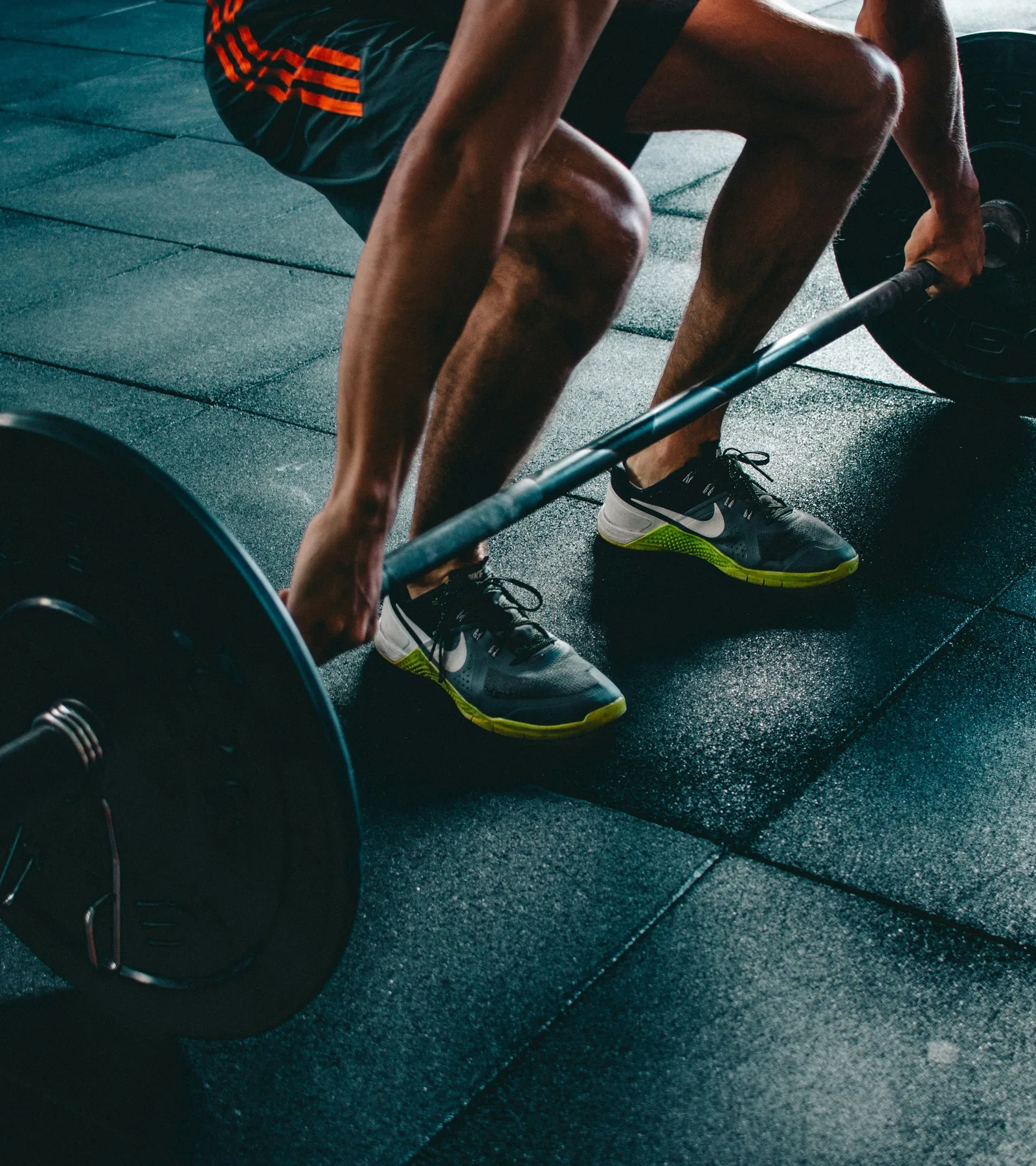
Other apps hand athletes a programme. KAYN writes the session, every day.
A programme
The real day
What KAYN does that others don't
How it works. Three things go in. One session comes out.
The AI engine
Working inside a database of sport science.
Nothing is pulled from a template.Today's session
Personalised to the athlete and to today.
With the reasons stated.Every finished session goes back in. The weights lifted and how it felt set the next starting point.
Why not just ask ChatGPT? A chatbot knows the conversation. KAYN knows the athlete.
What feeds it
Measured, not typed
A few taps at the morning check-in, one per set in the gym. Next: sleep and recovery straight from the athlete's wearable.
A chatbot: Knows only what is typed into it.
A logbook of every lift, not a memory of chats
Every set, rep and weight is logged as they train. Numbers, not notes, so today's weights start from the last ones lifted.
A chatbot: Remembers a few notes from past chats, not the numbers.
The whole season
Court hours, matches, the tournaments booked, the training block, the lighter week. Every day is planned in context.
A chatbot: Sees one workout at a time.
The coach's method
The fitness coach sets the frame and the engine applies it to every session. The coach sees all of it.
A chatbot: No coach in the loop.
KAYN
AI engine
Writes the day's sessionWhat it must pass
A science filter
Every rule is checked against published sport science — 203 sources so far. If the evidence doesn't back it, it doesn't go in.
A chatbot: Draws on the whole internet, popular advice included.
A final check
Right equipment, right length, right volume — checked before the athlete sees it. A session that fails is rewritten.
A chatbot: Sends whatever it writes.
Today's session
An app built for the gym floor.
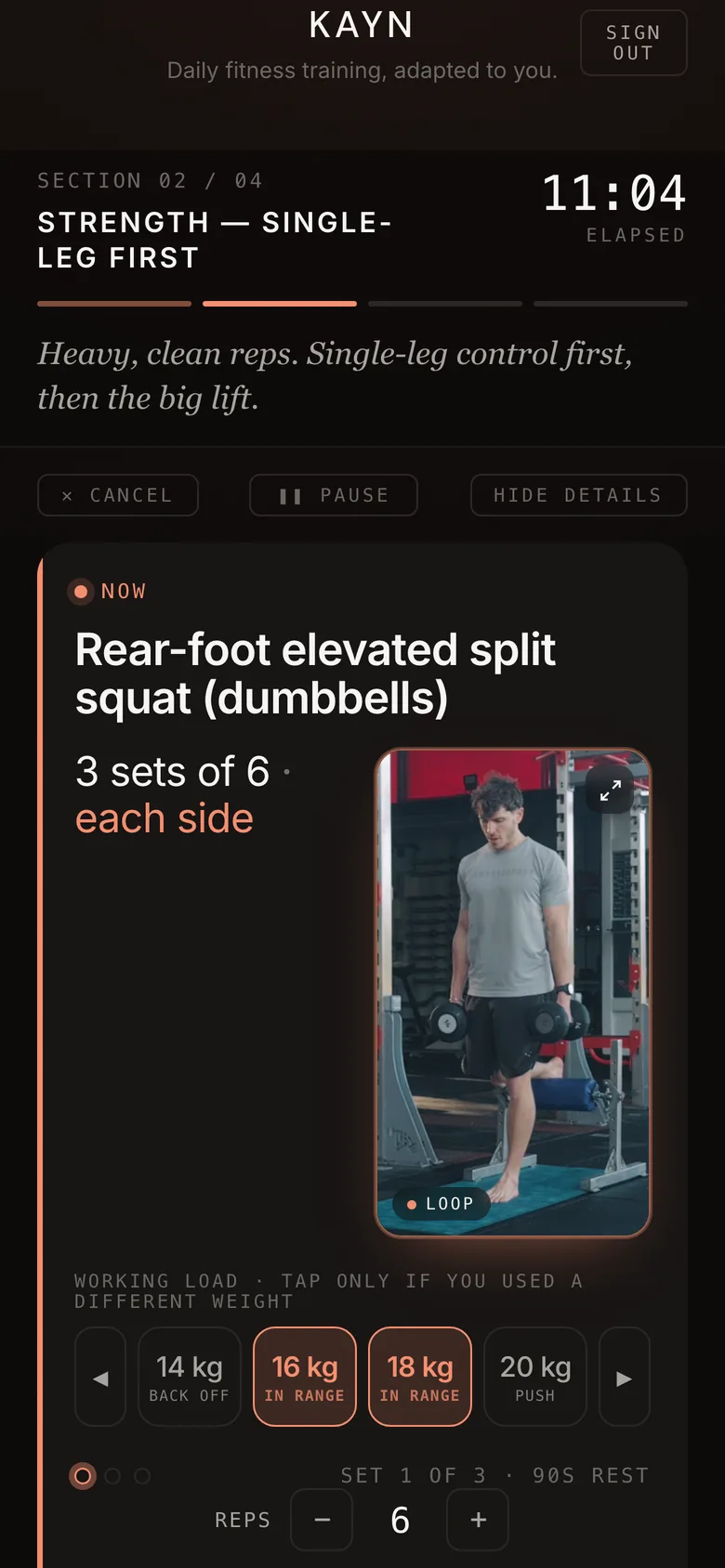
Easy to use mid-set: demo clips, the weights to lift, a rest timer, one tap to log.
A chatbot gives an answer. KAYN gives the athlete a training system, and the coach a say in it.
Every logged set feeds the next session. The more they train, the better it knows them.
For the athlete. No templates. Every session written for them.
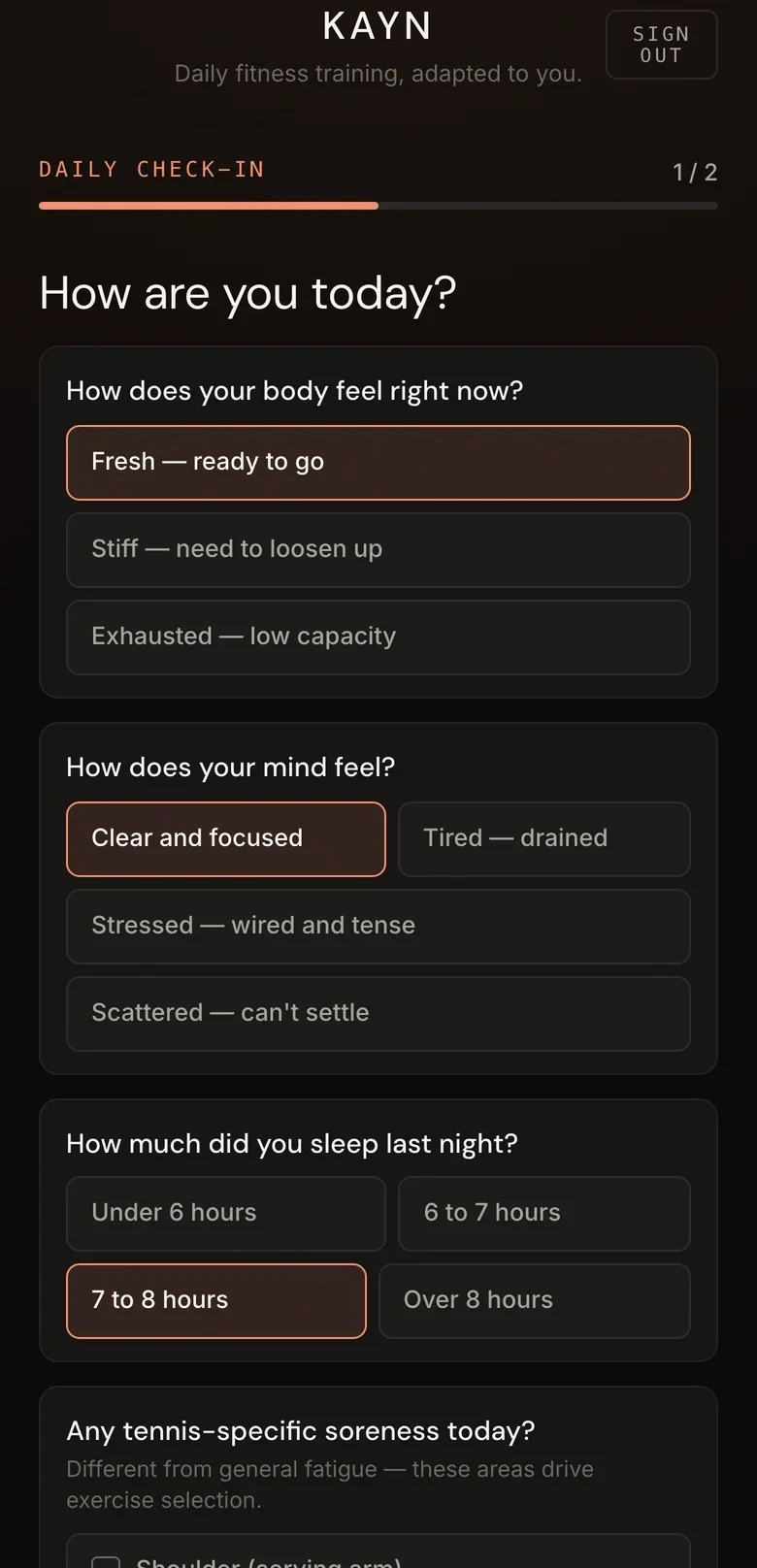
Body, mind, sleep and soreness, plus where they train and how long they have. Tired or sore? The AI engine lightens the session.
A demo clip for every movement. The weights come from the athlete's own history. One tap logs each set.
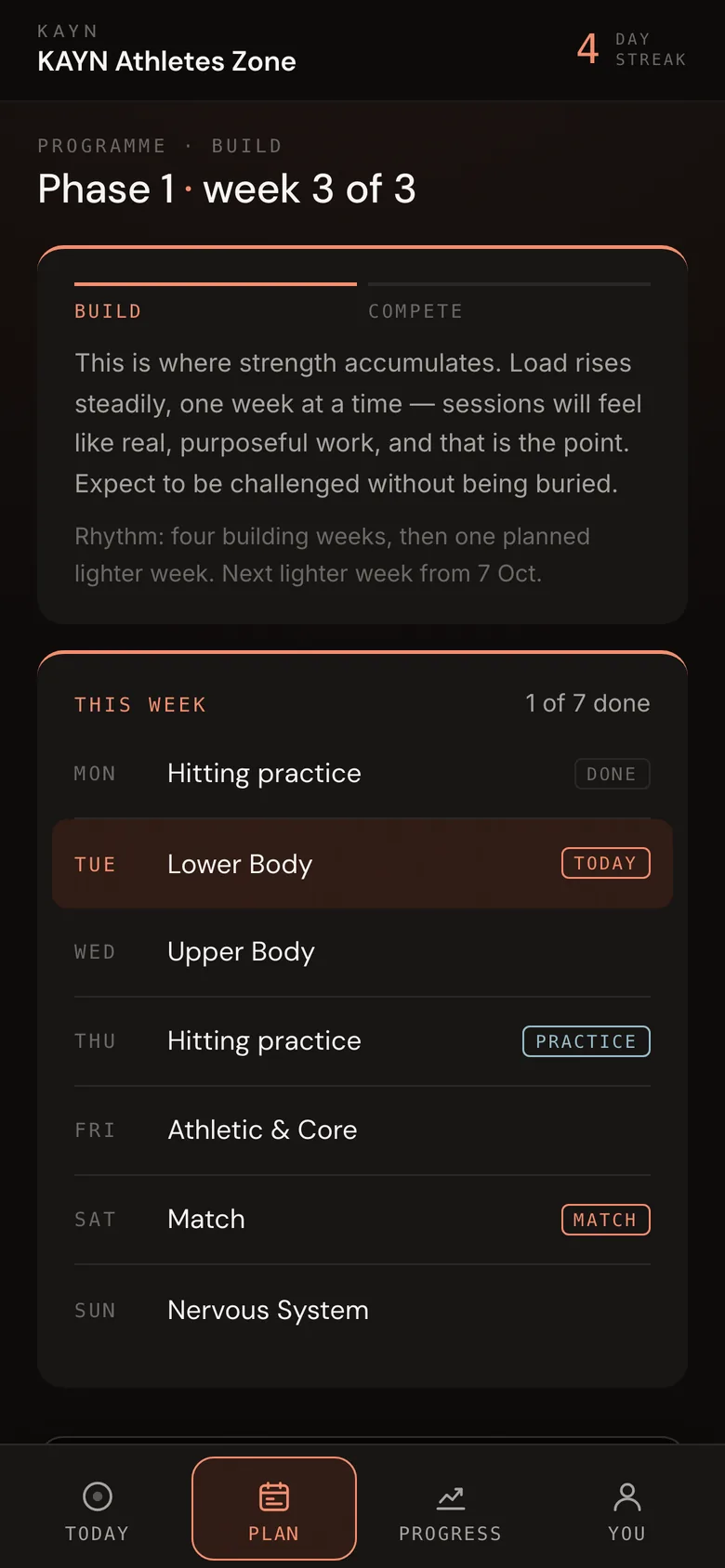
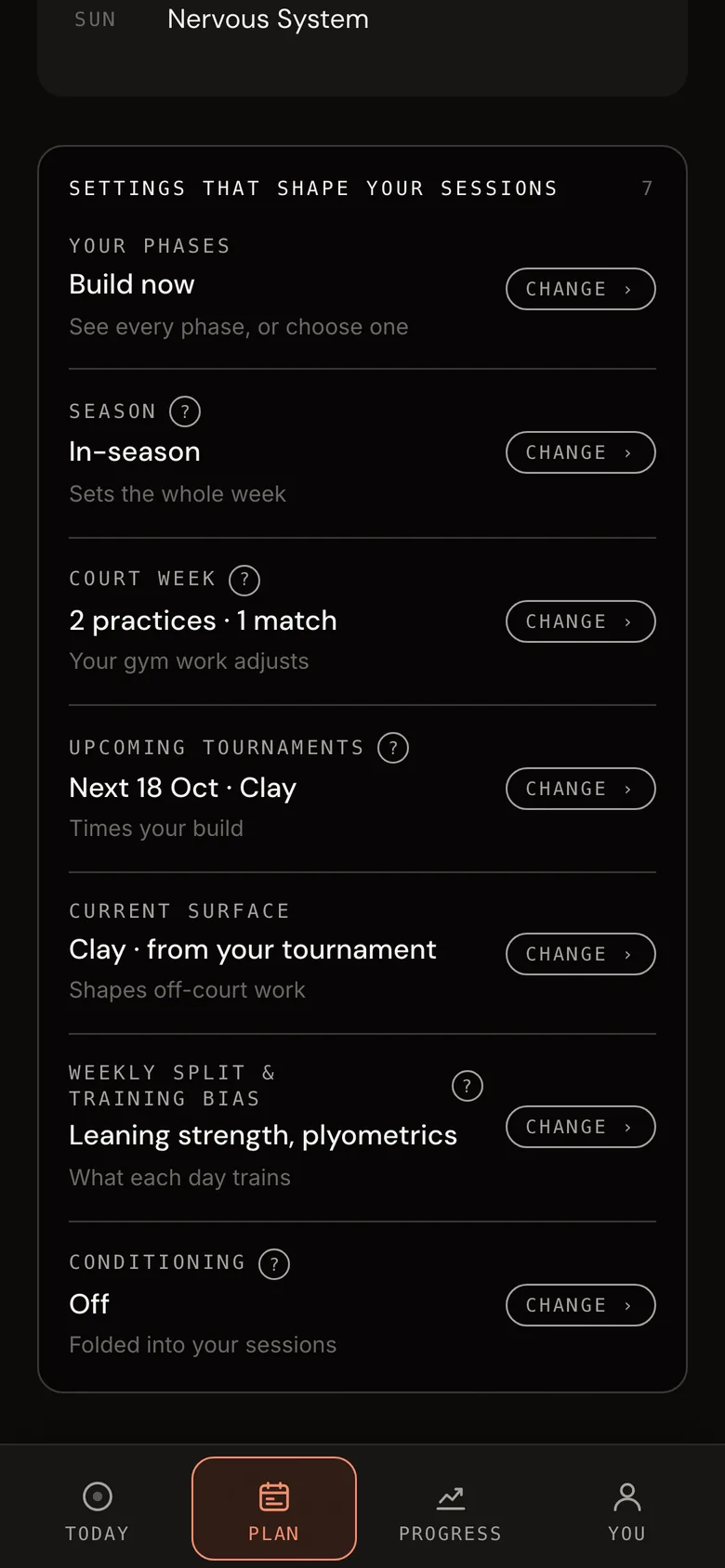
Court hours, surface and season. The heavy work stays away from matches, and the training block is timed for the tournaments booked.
More strength, power, conditioning or mobility? The athlete says so, and it is built in.
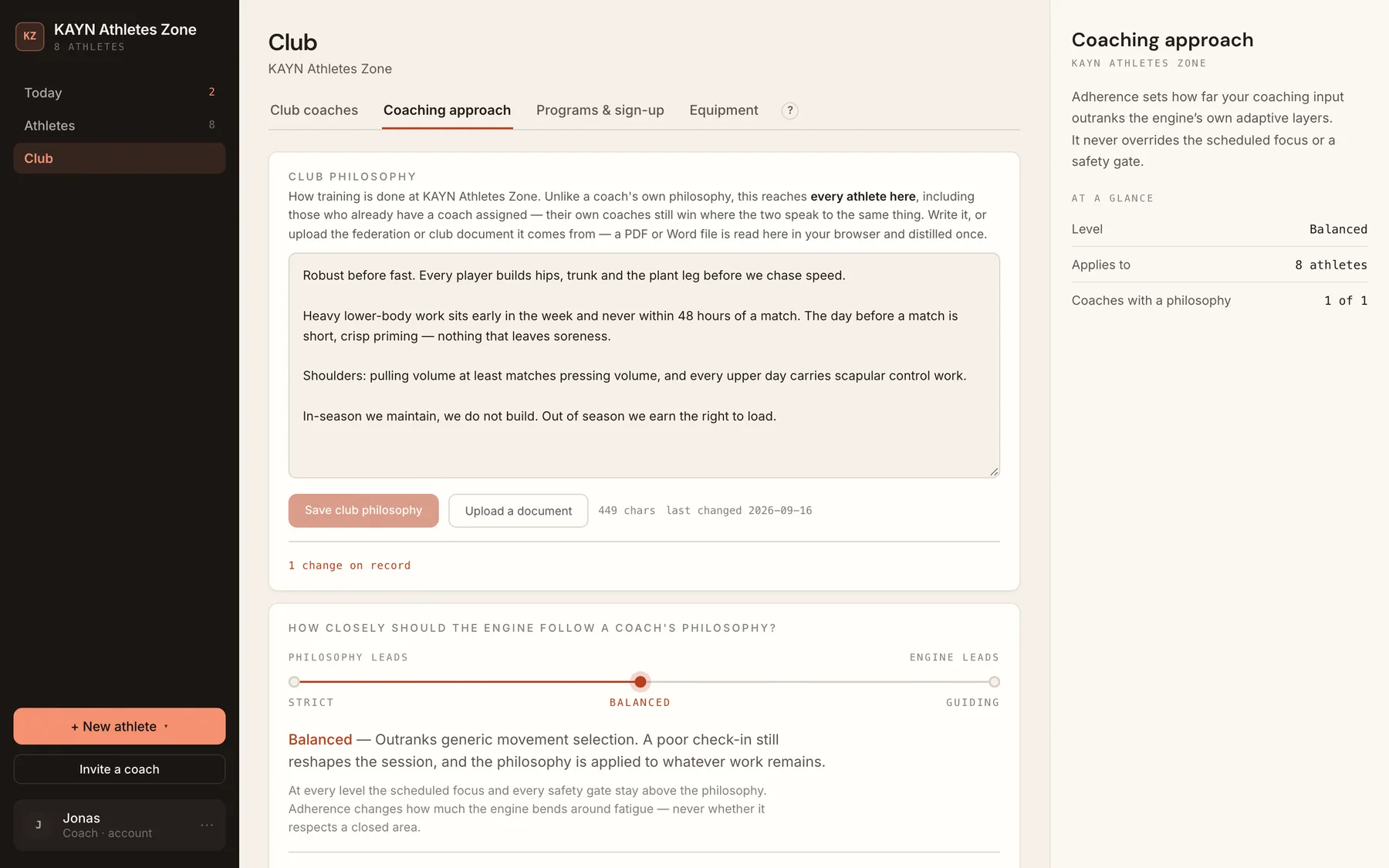
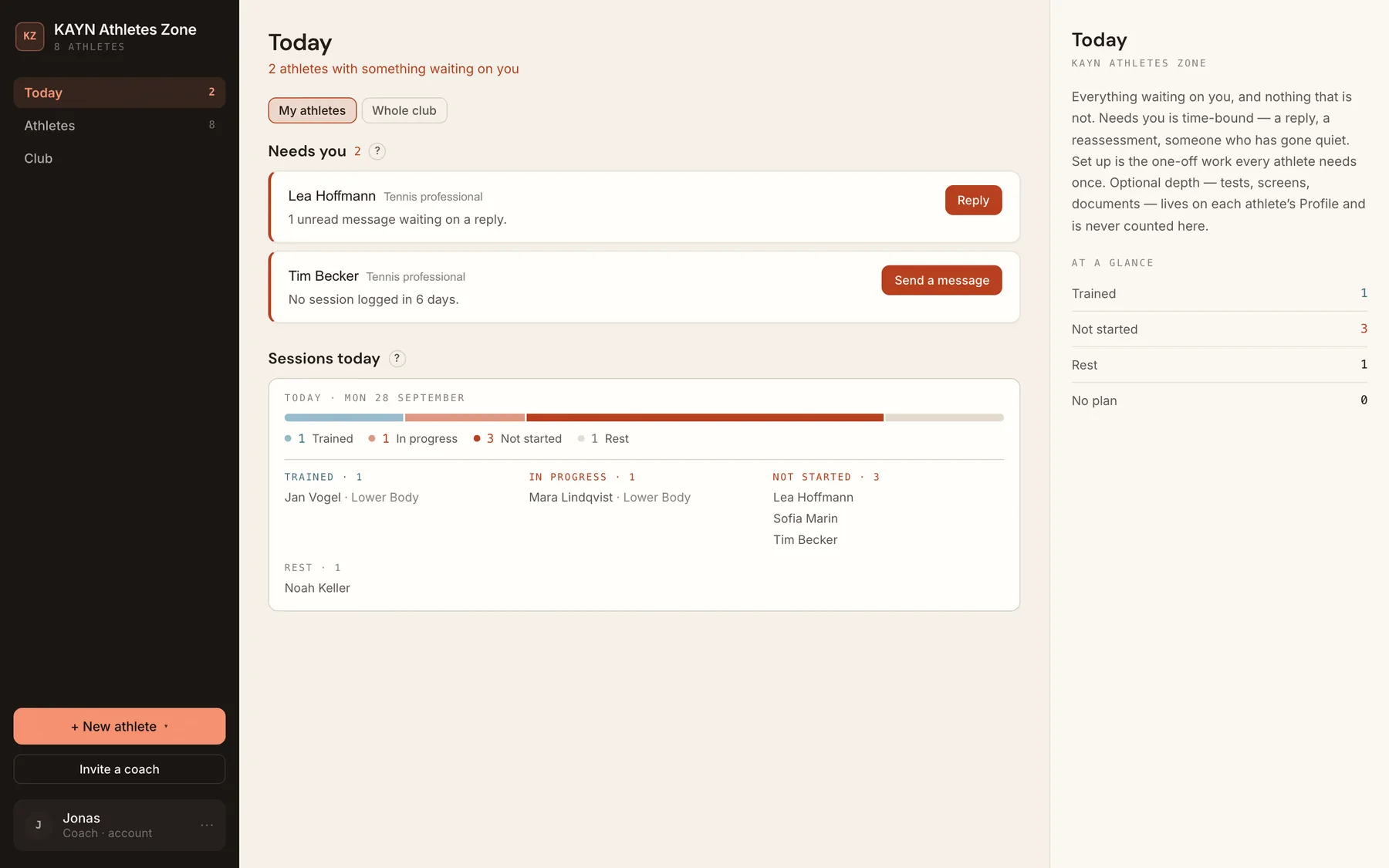
For the fitness coach. Already working with one? Great. We want their input too.
Training methods typed in or uploaded once, with how closely to follow them — from strict to guiding. The AI engine applies them to every session.
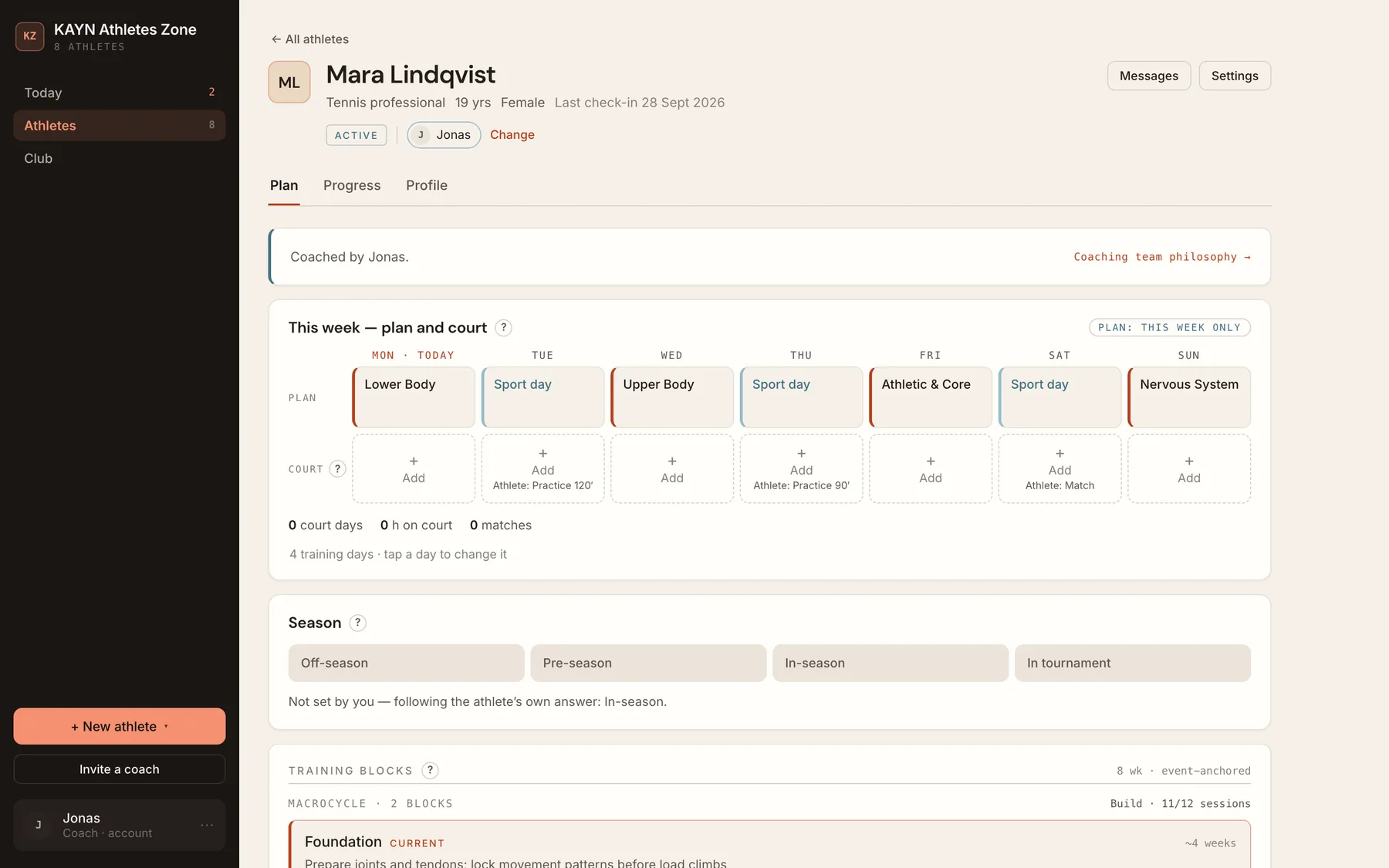
Each athlete's week, court load, assessments and progress, in one place.
Who trained, who didn't, and a message waiting — seen at a glance. Less time on plans, more with the athletes.
The record. The training, the effort and the results, in one place.
Every session
Four facts, kept.
Captured while the athlete trains, not reported afterwards.
Beyond tennis
Tennis is just the beginning.
One AI engine, built to adapt training to any sport. Each sport brings its own demands; the engine stays the same.
Start today
The first session is one check-in away.
Runs in the browser on a phone — nothing to install. Fitness coaches and clubs: we set the club up.
 On a computer? Scan with
a phone camera.
18 and over. Under 18? Train with KAYN through a club, with a coach.